

Blog 13: Antony and Cleopatra
It’s been a while, I know! But with a couple of weeks to go before exams start, at all levels, I’ll be looking at a text which is used at both (I)GCSE and A Level: Shakespeare’s Antony and Cleopatra.
With all of these blog posts, in the last few days before exams, I’ll be highlighting three important things on which to focus in order to boost your grade.
Key Character
Antony. As much as this is an historical piece about Roman politics at the turn of the first millennium, this is also a very modern (well, Jacobean) exploration of male hubris, and the decision to value the self above the political: a choice which still has resonances today (Harry and Meghan, anyone?).
Key Theme
Aforementioned pride, and wilful ignorance: as Antony ignores his advisors to play games (quite literally, in some cases) with Cleopatra. Like all of Shakespeare’s tragedies, there is a figure at its centre who is undone both by others and by his own inherent flaw (hamartia): in Antony’s case, his belief that it is possible for him to stop being the general and politician at the heart of the Roman military and social establishment.
Key Quotation
‘Let Rome in Tiber melt, and the wide arch / Of the ranged empire fall!’ Spoken by Antony at the beginning of the play, this sets out his stall, showing his belief that it’s possible for Rome to ‘melt’: his use of synecdoche (‘Rome’ for ‘the Roman Empire’) shows the extent to which he is already thinking about abnegating his responsibilities to this institution, which will be the couple’s ultimate downfall.
📌 EXAMS ARE GETTING CLOSE! If you want more of this focus on character, theme, language, and context to prepare you, do get in touch.

Blog 12: A Doll’s House
In the next instalment in what is turning into a monthly series, we look at Ibsen’s dramatic masterpiece (and possible feminist manifesto): A Doll’s House.
With all of these blog posts, I’ll be highlighting three important things to consider to elevate your exam responses.
Key Character
Nora. Her actions are at the centre of the play, after all, and she is at the centre of the work’s central allegorical conceit: the Helmer house as a claustrophobic setting ('a doll’s house’) in which Nora is incarcerated, and is Torvald’s plaything: his ‘squirrel’, as he puts it in one of his many diminutive references to his wife.
Key Theme
Struggle. Ibsen’s play should be appreciated as a product of its time: one of a swathe of realist dramas (along with the work of Chekhov, Strindberg, and others) that focused on the real-life struggles of lower-to-middle-class Europeans in the second half of the nineteenth century. In the aftermath of Marx and Engel’s Communist Manifesto of 1848, the struggles of ordinary people came to be seen, increasingly, as appropriate dramatic material for works of literature.
Key Quotation
‘I believe that first and foremost I am an individual, just as you are’ says Nora to Torvald at the denouement of the play, and explaining her self-emancipation. In spite of what Joan Templeton (1989) described as an anti-feminist ‘backlash’, it is clear that this statement of female autonomy backed up the growing movements towards universal suffrage in Europe at the end of the nineteenth century.
📌 If you want more of this focus on character, theme, language, and context to prepare you for your exams, get in touch.

Blog 11: Feminine Gospels
After nearly a month off with work commitments, the blog returns with another focus on an A Level text: Carol Ann Duffy’s The Feminine Gospels.
With all of these blog posts, I’ll be highlighting three important things to consider to elevate your exam responses.
Key Character
‘The Woman Who Shopped’. Exploring the idea of the oppression of women (see next section), this poem is all about the extent to which a loss of identity for women is encoded in the fabric of an inherently patriarchal society, through ideas like marriage and a focus on appearances. The asyndetic structure of ‘wanted a wedding, a wedding dress, groom,/
married him, wanted a honeymoon, went on one’ adds to this frenetic sense of loss: the female narrator does not have time to breathe, she is so wrapped up (pun intended) in the expectations of society.
Key Theme
Oppression of women. First published in 2002, Feminine Gospels came shortly after Duffy’s collection The World’s Wife (1999), which reimagined key stories from history and mythology through the eyes of (often despairing!) female partners: King Midas’s exasperated wife, for example. In your A Level answers you need to be aware of this generic (AQA Assessment Objective 4) and historical (AQA AO3) context, as well as the ideas of feminist criticism (AQA AO5) on which Duffy relies heavily.
Key Quotation
‘The sky was unwrapping itself, ripping itself into shreds.’ From ’The Woman Who Shopped’, this is the first line of the last stanza. The violence of the language here — ‘ripping’, ‘shreds’ — underlines Duffy’s anger at this situation; moreover, there is a comment here on what the forces of consumerism do: they cause people to damage themselves. In this way, Duffy’s poem ends not only as a condemnation of the masculine oppression of women, but a far more general censure of the violences enacted by modernity on all people, of all genders.
📌 If you want more of this focus on character, theme, language, and context to prepare you for your exams, get in touch.
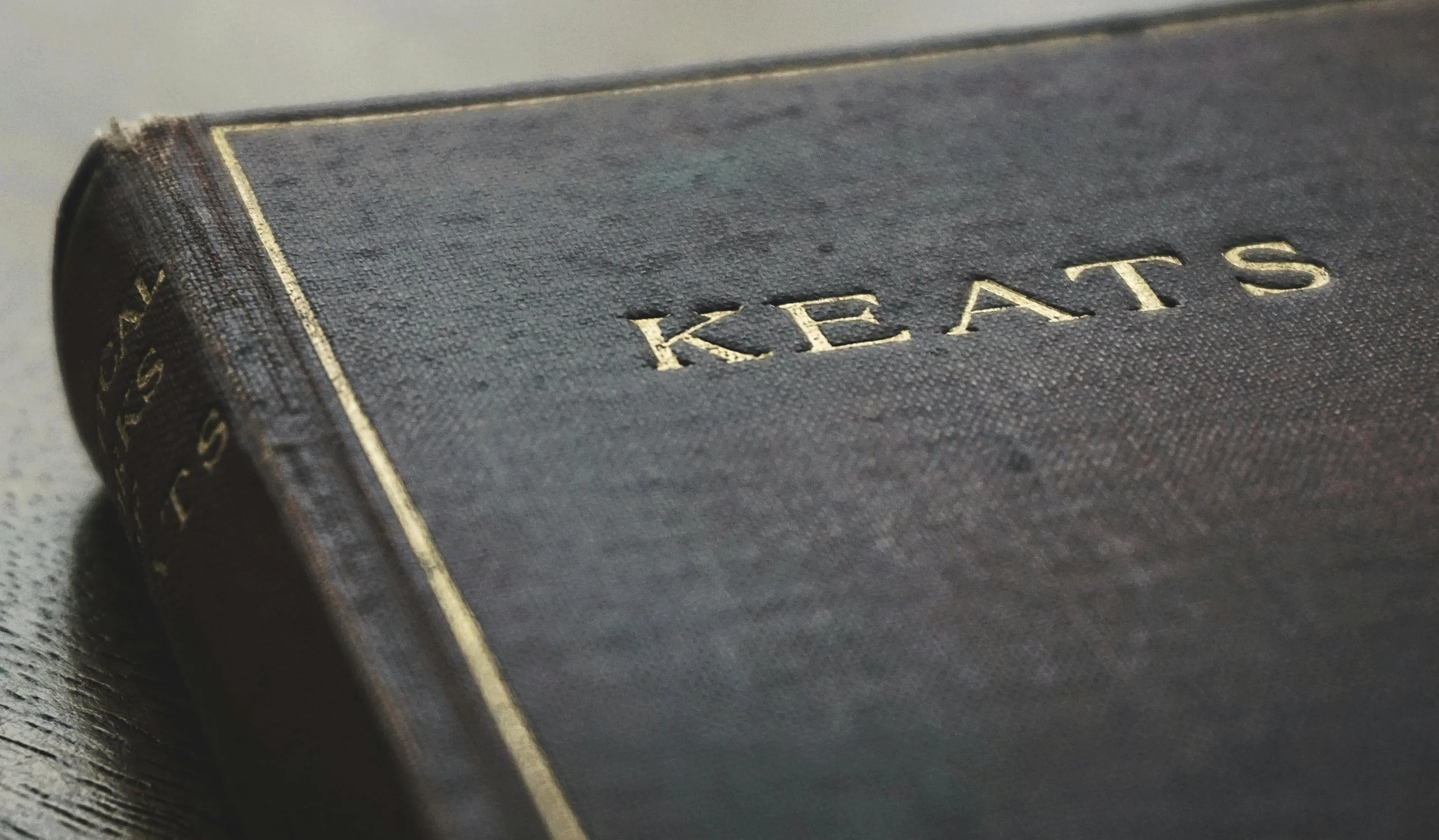
Blog 10: Keats
In today’s blog, the focus will be the next of our A Level texts: the poetry of John Keats.
With all of these blog posts, I’ll be highlighting three important things to consider to elevate your exam responses.
Key Character
‘La Belle Dame’. It is important to know — and this will flesh out your use of historical context, essential at A Level — that ‘La Belle Dame Sans Mercy’ was written the year after Keats had (unsuccessfully) nursed his dying brother through a disease (TB) that was thought at the time to be linked to sexual depravity: ‘La Belle Dame’ leads the knight-at-arms astray just as society would have thought Keats’s brother had been; the poem is both a love-letter to his brother and a cry of anguish about what had happened.
Key Theme
Illness. Following on from the character link, there is lots of illness in Keats: characters are described as ‘pale’, ‘wan’, and ‘meagre’. This makes sense, given our knowledge of his life: as well as his brother, he lost his mother to TB when he was 16, and his father died in a riding accident when Keats was a child; his was a short life punctuated by loss. Even in poems celebrating love, this loss is often close to the surface (see Isabella and Lorenzo in ’The Pot of Basil’, for example).
Key Quotation
‘No dream, alas! Alas! And woe is mine!’ In ’The Eve of St. Agnes’, Madeline wakes from her slumber to the realisation that not only has Porphyro been in her bedroom in the flesh — not just in her dream — but that he has performed an act on her, ‘a deceivèd thing’, which means that she feels she has no choice but to elope with him: a sad normalisation of sexual behaviour which Keats recognises, but with which he does not agree. ‘Love’ and loss combine, again.
📌 If you want more of this focus on character, theme, language, and context to prepare you for your exams, get in touch.
Blog 09: King Lear
In today’s blog, the focus will be the next of our A Level texts: Shakespeare’s King Lear.
With all of these blog posts, I’ll be highlighting three important things to consider to elevate your exam responses.
Key Character
Cordelia. Lear’s downfall is a direct result of his failure to ‘see better’, as Kent puts it, over his (Kent’s) insistence that Cordelia is in the right. His (Lear’s) misunderstanding about the worth of his elder daughters’ protestations and Cordelia’s honesty — linked to the hubris that he shows about having his ego stroked — leads to his tragic end.
Key Theme
Sight. The aforementioned quotation underlines this, but it is not the only imperfect sight in the play: most obviously, Gloucester’s blinding is a graphic literalising of this metaphor, and the fact that many of the play’s results derive from a failure in the older generation’s sight.
Key Quotation
‘You do me wrong to take me out o’ th’ grave’, Lear moans when Cordelia wakes him, having rescued him at the end of the play. He believes that he deserves to be dead for what he has done; most heartbreakingly, he is taken from this ‘death’ by the one person he wronged the most, and whom he thinks would be most justified in shunning him. One of the most beautiful lines in Shakespeare.
📌 If you want more of this focus on character, theme, language, and context to prepare you for your exams, get in touch.

Blog 08: Atonement
In today’s blog, the focus will be the next of our A Level texts: Ian McEwan’s Atonement.
With all of these blog posts, I’ll be highlighting three important things to consider to elevate your exam responses.
Key Character
Briony. The book is an exploration of what is done to Robbie — perhaps because of the magnetism of James McAvoy in the 2007 film — so by many he is seen as the protagonist of the novel. But it is Briony who, through her ‘spontaneous’ (to quote from her own play, performed at the start of the novel) actions, acts as the catalyst for the novel’s dramatic, tragic action.
Key Theme
Fiction. In its original sense: human creation. What happens to Robbie — and, thus, Cecilia — is a direct result of the story created by Briony. But we must remember that this postmodern novel is also concerned with questioning the very nature of truth itself: to what extent is Briony a reliable narrator? How much can she realistically know about Robbie’s wartime experiences?
Key Quotation
Briony describes, after the events leading to Robbie’s arrest, a ‘dreamlike’ time in which she is kept awake by ‘her own vile excitement’: even at this stage (p. 173, before the sections about Cecilia, Robbie, and the events of WWII), Briony knows that she has done something wrong; she has committed a ’vile’ act, and it is not Robbie who commits the evil act that drives the narrative — it is Briony who must ‘atone’.
📌 If you want more of this focus on character, theme, language, and context to prepare you for your exams, get in touch.

Blog 07: The Great Gatsby
In today’s blog, the focus will be the next of our A Level texts: F. Scott Fitzgerald’s The Great Gatsby.
With all of these blog posts, I’ll be highlighting three important things to consider to elevate your exam responses.
Key Character
Tom Buchanan. Following on from last time’s focus on Biff in Death of a Salesman, Tom is another character whose self-worth is tied to athletic prowess of more than a decade previously. This colours (given his racist tendencies, the choice of word is deliberate!) his attitude towards the other characters, and his need to control Daisy, Myrtle, and — in a different way — Gatsby.
Key Theme
Isolation. Jay’s tragedy is realised because he remains fundamentally alone, in spite of the parties he throws. Daisy and Tom, in spite of their differences, come together at the end of the novel: literally, as we see them sitting down to dinner together. Jay is excluded from this scene, which he can only observe through the glass: a fitting representation of the exclusion and isolation that he undergoes as a result of his social background.
Key Quotation
Nick calls the Buchanans and their ilk a ‘rotten crowd’, when speaking to Jay towards the end of the book: he says that Jay is ‘worth the whole damn bunch put together’. Fitzgerald here invites us to speculate about this idea of ‘worth’, which is a socially loaded word: from the perspective of society at the time, Jay is not ‘worth’ anything much; his role in holding a lens up to this society, though, forces us to question the implied hierarchies and prejudices encoded in such a term.
📌 If you want more of this focus on character, theme, language, and context to prepare you for your exams, get in touch.

Blog 06: Death of a Salesman
In today’s blog, the focus will be the next of our A Level texts: Arthur Miller’s Death of a Salesman.
With all of these blog posts, I’ll be highlighting three important things to consider to elevate your exam responses.
Key Character
Biff. All the members of the Loman family (the play on words in the surname is clear, remember) were candidates for this, but I do like Biff as (a) the locus of Willy’s desires for a future that can never come and (b) a perfect example of that stereotypical figure of tragedy, someone whose greatest achievement in life came in his late teens, and who has spent 50% of his life trying to regain this glory (see also Tom Buchanan from The Great Gatsby).
Key Theme
Reputation. Willy talks about being ‘vital in New England’, but this is a reminder that the world has moved on: what matters now, in post-WWII America, is making sales and generating income; the ‘American Dream’ to which Willy still clings is based on success coming as a result of ‘who you know’. Willy has been left behind, with tragic consequences.
Key Quotation
‘The grass don't grow any more, you can't raise a carrot in the backyard’: symbolises the extent to which Willy feels boxed in physically by the urban growth that surrounds him — but also mentally, as he no longer has the commotion with nature that he feels was there in the past: there is something unnatural about his current state.
📌 If you want more of this focus on character, theme, language, and context to prepare you for your exams, get in touch.

Blog 05: Othello
In today’s blog, the focus will be the first A Level text for this week: Shakespeare’s Othello.
With all of these blog posts, I’ll be highlighting three important things to consider to elevate your exam responses.
Key Character
Iago. His manipulations — of Othello, of Rodrigo, of Desdemona, of Cassio, of Emilia: essentially, of everyone! — are central to the plot. And engaging with Coleridge’s idea about ‘motiveless malignity’ is a great way to not only access marks for critical engagement but also address questions about why Iago acts as he does: what is his motive?
Key Theme
Othello’s jealousy dominates his manipulation at the hands of Iago, in terms of sexual jealousy about Desdemona. I would argue, though, that his jealousy is more extensive than this, stemming from his fundamental insecurities about how he is viewed by the Venetian establishment, as a black man who is seen as an outsider in spite of his military prowess.
Key Quotation
Following on from the last point, I would say that Othello’s final speech is pivotal: ‘I have done the state some service, and they know’t’. Heartbreakingly, when he acts out the punishment that he inflicted on an enemy of Venice — one who ‘traduc’d the state’ — he is in fact bringing on himself the same othering process: he is placing himself as an other, and showing that, actually, he was never truly a part of the Venetian establishment.
📌 If you want more of this focus on character, theme, language, and context to prepare you for your exams, get in touch.
Blog 04: An Inspector Calls
In today’s blog, the focus will be the last key GCSE text for this week (on to A Level for a bit now): Priestley’s An Inspector Calls.
With all of these blog posts, I’ll be highlighting three important things to consider to elevate your exam responses.
Key Character
There are lots of options here, depending on the focus of the question — Mr Birling for tradition, Eric for youth v old age — but the Inspector himself is a central touchstone and the catalyst for the play’s action: not only does he shine a light on the Birlings’ hypocrisy, but his intervention causes concrete changes in the other characters.
Key Theme
I’ve already mentioned it, but change is really important. Priestley, as an avowed socialist (link to Historical Context [AQA AO3]: the ability to use this in discussing the quotations you use is really important), wanted to see changes in the post-WWII society in which he was writing (different from the pre-WWI context in which the play is set, crucially).
Key Quotation
If you’re answering a question using these character and theme ideas, you really need to make reference to Inspector Goole’s final line in the play: ‘And I tell you that the time will soon come when, if men will not learn that lesson, then they will be taught it in fire and blood and anguish. Good night.’ The character is throwing forward to the horrific events of the twentieth century: Priestley is using dramatic irony to make reference to things with which we are already familiar, but the characters are not, underlining the extent to which the Inspector can be seen as an almost supernatural character in the play.
📌 If you want more of this focus on character, theme, language, and context to prepare you for your exams, get in touch.

Blog 03: Romeo and Juliet
In today’s blog, the focus will be another key GCSE text: Shakespeare’s Romeo and Juliet.
With all of these blog posts, I’ll be highlighting three important things to consider to elevate your exam responses.
Key Character
Juliet, around whom the tragedy revolves. Yes, Romeo is important, too, but the female protagonist’s decision to speak up for herself in a patriarchal society — to someone who can go from ‘Madam, I am here. What is your will?’ In Act 1, Scene 3 to ‘My dismal scene I needs must act alone.’ In Act 4, Scene 3 — is truly subversive.
Key Theme
Marriage, and the reasons behind this. Remember this was written in 1595/96, towards the end of the Elizabethan era, when the question of the English queen’s not having married — and produced an heir — was an important concern (bring in your knowledge of historical context [AQA AO3]). Capulet’s plan for his daughter (to marry Paris) is built on political expediency; Juliet’s own plan (to marry Romeo) has its foundations in love. The play is an exploration of this.
Key Quotation
From Juliet, to Romeo, in Act 2, Scene 2: ‘Wherefore art thou Romeo?’ Not only important because it gives you the opportunity to show off the fact you understand that this means ‘Why are you Romeo?’ not ‘Where are you, Romeo?’, but also because you can link it to the feuding families and the idea of marriage: in saying ‘Wherefore art thou Romeo?’, Juliet is bemoaning the fact that the man she loves is a Montague.
📌 If you want more of this focus on character, theme, language, and context to prepare you for your exams, get in touch.

Blog 02: Macbeth
In this week’s blog, the focus will be another key GCSE text: Shakespeare’s Macbeth.
With all of these blog posts, I’ll be highlighting three important things to consider to elevate your exam responses.
Key Character
The protagonist (the ‘first actor’: so nothing to do with being a good guy, which he definitely isn’t!) is a good one, but so is Lady Macbeth — consider the question of whose ambition is bigger, hers or her husband’s. Is her ambition to be queen merely a mirror of her husband’s to be the king, or does she in fact drive him to act as he does; and thus is she the key catalyst for the play’s action?
Key Theme
Following on from this, the idea of ambition is centrally important — remembering that, in his soliloquy in Act 1 Scene 7, Macbeth decides, when he has come up with any number of reasons not to kill Duncan, that the only reason to go ahead with the murder are his royal ambitions: ‘I have no spur/To prick the sides of my intent, but only/Vaulting ambition’.
Key Quotation
From Lady Macbeth, to her husband, in Act 1, Scene 5: ‘Look like th’ innocent flower,/But be the serpent under ’t.’ More fuel to the argument about whose ambition is greater. It also sets up the idea of masking, or pretence — this line was spoken by an actor who was himself (no women on stage in Shakespeare’s time, remember: bring in your knowledge of historical context [AQA AO3]) pretending to be an ‘innocent flower’ of a different sort.
📌 If you want more of this focus on character, theme, language, and context to prepare you for your exams, get in touch.
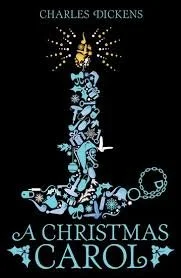
Blog 01: A Christmas Carol
It all begins with an idea.
In this series, I’ll be giving regular short introductions to GCSE and A Level English Literature texts, in the run-up to mock exams, structured around 3 key pointers to help you with your revision.
Today’s focus will be on A Christmas Carol.
With all of these blog posts, I’ll be highlighting three important things to consider to elevate your exam responses.
Key Character
It has to be Scrooge himself. Make sure your essay response considers the development of Scrooge as a character over the course of the narrative: how does he change? To what extent is this story — a ‘Carol’, remember — a performance about the Christmas-time redemption of the protagonist? (From the Greek for ‘first’ or ‘principal’ — nothing to do with being good or bad.)
Key Theme
Light. Is this whole story about Scrooge metaphorically ‘moving into the light’? At the beginning, he says ‘darkness is cheap’ — his financial ethos (his miserliness) is linked to an absence of light. The spirits, though, bring him light, often literally: a ‘bright clear jet of light’ emanates from the Ghost of Christmas Past. And scenes of happiness are often associated with well-lit rooms.
Key Quotation
From the Ghost of Christmas Past: ‘would you so soon put out, with worldly hands, the light I give!’ This links to the first two points, and gives you something to talk about that links the theme of light, or enlightenment, with the supernatural. Think about the language used, in particular: why is Scrooge described as ‘worldly’?
📌 If you want more of this focus on character, theme, and language to prepare you for your exams, get in touch.

Blog: Exam Success
It all begins with an idea.
In this series of blog posts, I’ll be giving regular short introductions to GCSE and A Level English Literature texts, in the run-up to mock exams, structured around 3 key pointers to help you with your revision.
📌 If you want more of this focus on character, theme, and language to prepare you for your exams, get in touch.